Home › Container Grades
Four words set every container's price. Learn what each one commits the seller to — and make it appear on your quote.
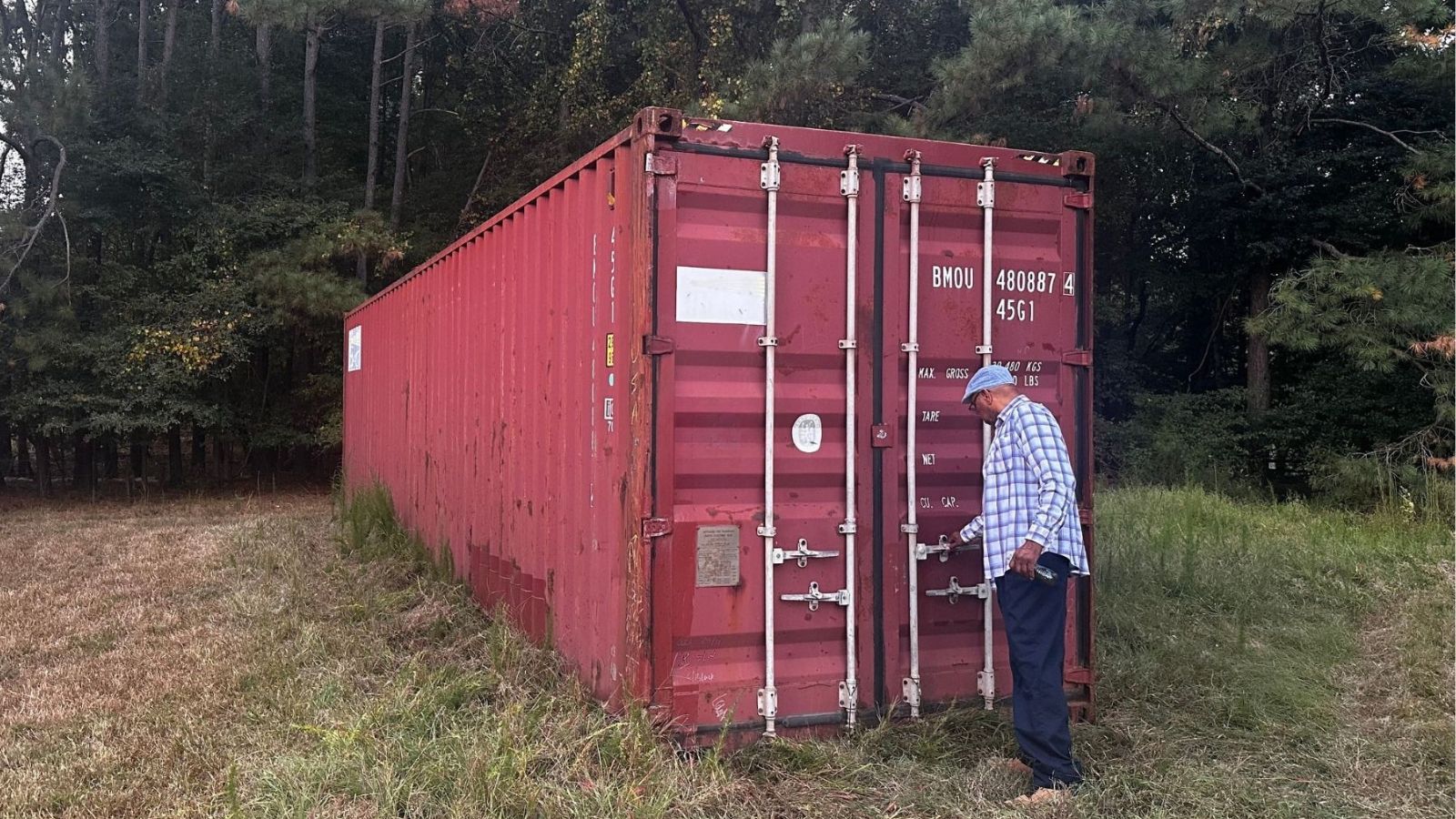
Grades are the used market's entire vocabulary, and mastering them takes five minutes: one-trip, cargo-worthy, wind-and-watertight, as-is. Every honest quote in the metro names one; every regretted purchase we've ever heard about skipped that step. Here's each grade, what it commits the seller to, and the price behavior to expect.
Manufactured abroad, loaded for exactly one revenue crossing, then retailed. Factory paint, unmarked floors, gaskets with decades left. You pay a $1,500–$2,500 premium over used for maximum runway and clean-canvas looks — rational for visible placement, build-outs, and buy-it-once planning. Not rational for hiding behind a barn, which is where the next grade lives.
CW is a standard, not an adjective: surveyed structure, doors, floor, and seals fit to carry cargo at sea. In practice it's a 8–15-year veteran with cosmetic battle scars and certified bones — the grade we recommend by default because it prices used while carrying paper. Most of the used inventory we move is CW.
WWT promises exactly two things: weather out, doors working. No survey, more mileage, honest price. On drained footing doing yard duty, a WWT box delivers 90% of a CW's service at a further discount — provided it was graded truthfully, which is why ours carry the same lifetime watertight warranty and the same at-the-truck rejection rights as every grade above it.
Parts donors, paint-shop projects, non-weatherproof coverage. Legitimate uses all — but "as-is" appearing anywhere near the word "storage" is your cue to leave. We don't retail as-is boxes as storage, period; the rail pipeline gives us the luxury of rejecting them upstream.
Two habits protect every dollar: match the grade to the placement (street-visible → one-trip; standard duty → CW; back-lot economy → WWT), and get the grade in writing, quote and invoice both. Then verify at the truck against the four-point check in the buyer's guide — roof, floor, gaskets, castings. Sixty seconds of looking beats sixty days of regretting.
Marine surveyors, against CSC (Container Safety Convention) standards — it's the certification that lets a box legally ship internationally. That paper trail is what separates CW from a seller's opinion.
Not when the seller defines it and stands behind it — ours carry the same lifetime watertight warranty as everything else. It becomes a gamble when 'WWT' is a vibe rather than a commitment; make any seller put the grade on the quote.
Functionally yes: built overseas, loaded once for the crossing that delivered it, then sold. Expect possible pinhole-level handling marks and nothing else. It's the closest thing to 'new' that exists in a market where empty boxes don't cross oceans for free.
A subtlety worth stating plainly: our lifetime wind-and-watertight warranty applies across grades — the WWT economy box and the one-trip showpiece carry identical coverage against holes. What differs by grade is everything the warranty doesn't govern: cosmetics, certification paperwork, expected remaining decades, and resale positioning. This is deliberate. Grade should price appearance and longevity, not gamble on dryness — dryness is the product, and it's guaranteed at every tier. When a seller's cheaper tiers come with warranty carve-outs, you're not looking at grades; you're looking at disclaimers wearing grade names. That distinction is worth a paragraph anywhere containers are sold, so here it is.