Home › New vs Used Conex
Same factory class, different mileage — the decision comes down to appearance, runway, and a price gap you can do real things with.
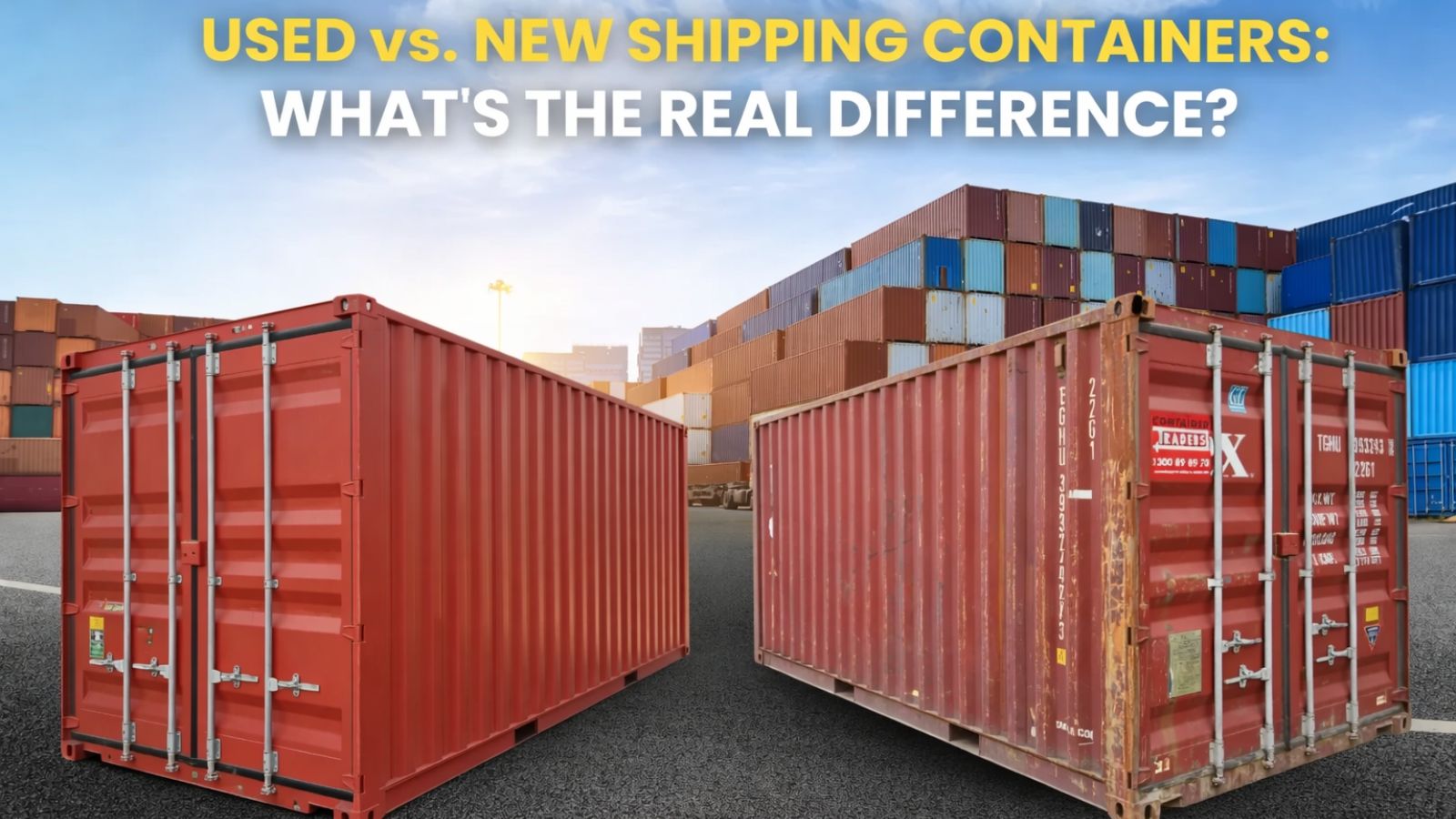
A one-trip container and a used cargo-worthy unit rolled out of the same class of factory — the only difference is the odometer. One crossed the ocean once; the other worked a decade first. Neither leaks when honestly graded, so the buying decision isn't about quality. It's about three things you can actually price: appearance, remaining lifespan, and the $1,500–$2,500 gap between them in the KC market.
The container is visible from the street or the customer parking lot; your HOA or Johnson County city scrutinizes lot appearance; you're insulating and wiring it into a workspace; or it's a decades-horizon purchase you want to buy exactly once. In appearance-sensitive suburbs like Leawood and Prairie Village, the clean box also makes every zoning conversation easier.
The box works behind a fence, on a farm, or at a jobsite where the first forklift scrape is a matter of when; the budget has a ceiling; or you're buying several and the per-unit savings compound. This is 80% of the metro's orders and the right call for most of them — browse the inventory logic on used conex boxes, then get both numbers from the calculator and let arithmetic finish the argument.
Both are watertight today and both carry our lifetime warranty against holes — the difference is runway. A one-trip has 25–35 years of expected service ahead; a used CW has 15–25. For most storage uses, either outlives the need.
Yes, twice: when the box faces neighbors or customers (repainting a used unit properly costs real money), and when you're building it out — clean steel saves prep hours that bill higher than the price gap.
Absolutely, and multi-box buyers should: the unit by the entrance goes one-trip, the two behind the shop go CW, and the blended total usually beats an all-anything order. We quote mixed orders on one sheet.
Containers are one of the few purchases in the equipment world with a genuine exit: the metro's used market is liquid enough that a maintained box sells within weeks, usually near what you paid. That changes the new-vs-used math at the margins. A used unit bought at market and resold three years later costs you almost nothing but the delivery fees — its 'depreciation' rounds to zero. A one-trip steps down once (the moment it stops being one-trip) and then plateaus at used-market rates. So for defined-term needs where you'll certainly sell after, used isn't just cheaper to buy — it's dramatically cheaper to have owned. For decades-horizon keeps, the one-trip's extra runway amortizes into irrelevance. Price the exit, not just the entrance.